
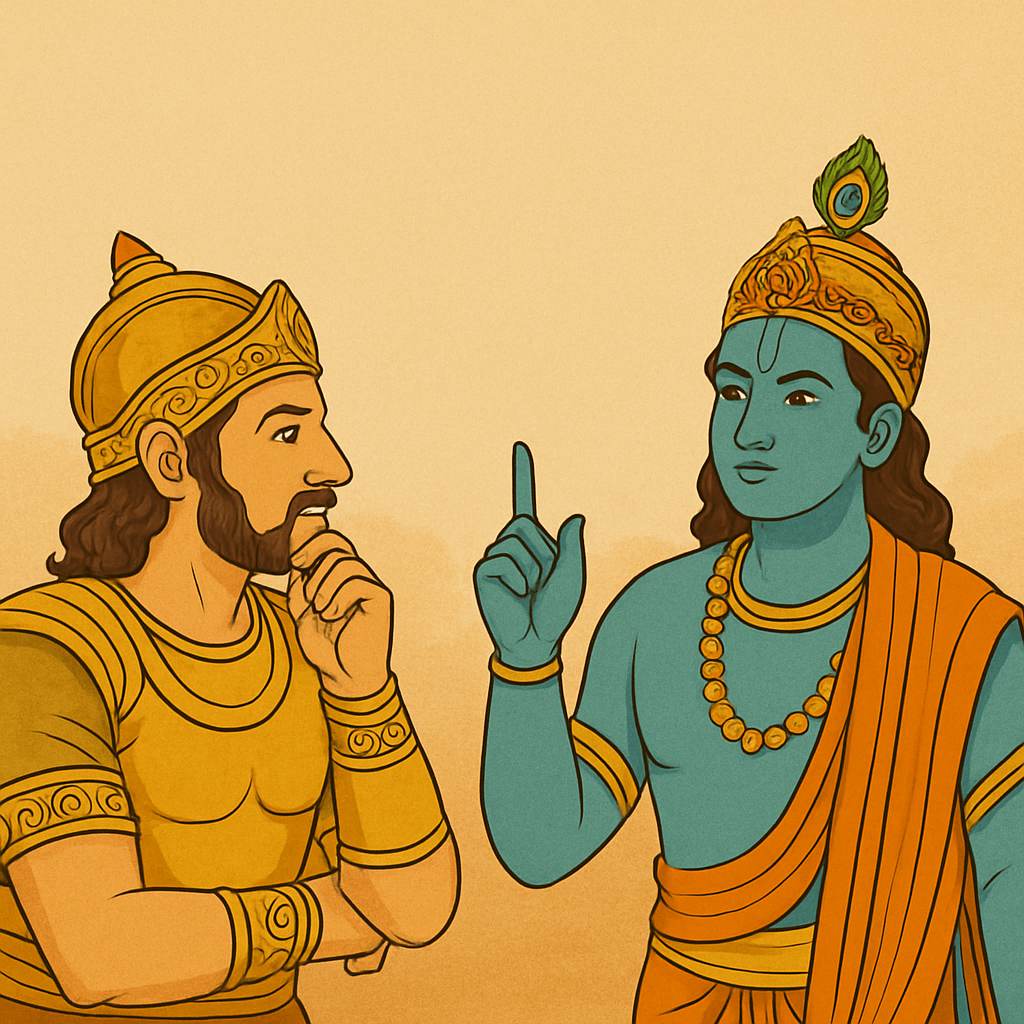
A Conversation Between Arjuna & Krishna
Arjuna: Krishna, I am shaken. Yesterday I saw something shocking. A leader everyone admired turned out to be a brilliant jerk—smart, sharp, but manipulative and vindictive. The team was dazzled at first, but soon drained. Tell me, is brilliance enough to lead?
Krishna: No, Arjuna. Brilliance without character is poison. It blinds in the short term but corrodes in the long run. A true leader is not measured by cleverness alone, but by the culture they build and the clarity they bring.
The Myth of the All-Knowing Leader
Arjuna: But many say a leader must know everything, be the deepest domain expert, speak the most, and win every debate. Is that not the truth?
Krishna: That, Arjuna, is the greatest myth of leadership—the illusion of the all-knowing leader. In today’s world, no one person can out-code the engineer, out-process the onboarding specialist, or out-sell the salesperson.
A leader’s role is not to outshine the experts, but to ask the right questions, frame the right problems, and clear the path so that others can shine. Leadership is not mastery of all trades—it is the mastery of synthesis.
Jargon vs. Clarity
Arjuna: I often see leaders who use big words and complex jargon. They sound impressive, and people mistake that for wisdom. Should I not do the same?
Krishna: Empty words are like arrows without tips—they make noise but pierce nothing. Real leadership is not about dressing ideas in fancy language, but about making complexity simple.
Remember this: people do not follow the one who confuses them the most; they follow the one who makes things clearest.
Balancing Process Depth and Customer Experience
Arjuna: My teams sometimes expect me to know their function inside out. They want me to speak their language, understand their tools, and solve their problems. Am I failing if I cannot match their depth?
Krishna: A leader must know enough to empathize, but also rise high enough to connect the dots across the journey. Too much detail, and you lose sight of the customer. Too little, and you lose the trust of your people.
True leadership is holding both—the depth to respect the work, and the breadth to see the bigger picture.
The Brilliant Jerk Dilemma
Arjuna: Krishna, return to what you said earlier—the brilliant jerk. I have seen such people. Brilliant, yes, but manipulative, hierarchical, vindictive. They hit targets, yet they leave teams broken. What should a leader do then?
Krishna: This, Arjuna, is one of the hardest choices in leadership. On parchment, the brilliant jerk looks indispensable. But in reality, they weaken the army from within.
A person may deliver numbers, but if they misbehave with colleagues, crush others’ voices, or breed fear, they fail the test of leadership. Organizations thrive not on the genius of a few, but on the trust of many.
And so, the courageous leader sometimes has to say no. Letting go of such talent may bring short-term discomfort, but it protects the long-term health of the culture.
Feedback vs. Anonymous Vents
Arjuna: Krishna, I see many of my peers rush to write on anonymous forums when they feel unheard. It becomes a wall of complaints, not a bridge of solutions. Is this the right way?
Krishna: No, Arjuna. Anonymous words may release frustration, but they rarely build trust. A healthy organization thrives on open dialogue, not hidden whispers.
If something troubles you, bring it to your leader, your HR partner, or your team forum. Speak with courage. Only then can issues be understood, addressed, and resolved.
Remember: a workplace is strengthened not by the shadows of anonymous feedback, but by the light of honest conversations.
From Start-up Scrappiness to Enterprise Maturity
Arjuna: My company was once a start-up—fast, scrappy, restless. Now it grows into an enterprise. Some say we must cling to our old ways; others say we must abandon them. Which path is true?
Krishna: Neither extreme, Arjuna. The bow you used in practice is not the bow you carry into battle, yet you do not forget your training. A start-up’s spirit of hustle must remain, but on it you must layer the discipline and maturity of an enterprise.
This is evolution: not losing your DNA, but shaping it for the future. Customers, employees, and investors do not just want to hear about where you came from; they must believe you are ready for where you are going.
Redefining Leadership
Arjuna: Then tell me, Krishna—what truly defines a leader?
Krishna: A leader is not the one with the loudest voice, the fanciest jargon, or the sharpest brilliance. A leader is the one who brings clarity in confusion, courage in doubt, and culture in chaos.
True leadership is not about being the all-knowing hero. It is about ensuring the whole army marches in the right direction.
Closing Thought: In every age—whether on the battlefield of Kurukshetra or in the halls of modern organizations—the truth remains the same: brilliance fades, but character, clarity, and courage endure.
 Beyond the Script...